
Juan Pesina
Happy Client

A crash with an 18-wheeler can change your life in seconds, and the days afterward often bring more questions than answers. Hines Law Firm’s Marietta truck accident lawyers represent people hurt by commercial trucks on I-75, I-575, and the roads across Cobb County. We find out what the trucking company knew, what its driver was doing, and which records prove it, so you can focus on healing.
The stretch of I-75 through Marietta carries heavy freight through traffic that often slows without warning, and many crashes here happen at low speeds or in sudden slowdowns rather than on open highway. Those crashes still leave behind important records, and some of them are only kept for a short time.
Call our Marietta office any time, day or night, for a free consultation in English or Spanish.
Our highly experienced lawyers will contact you for a Free Legal Consultation.
"*" indicates required fields
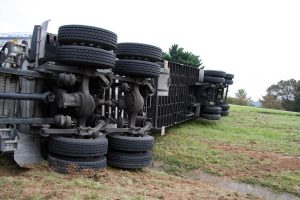
Truck crashes around Marietta often happen in stop-and-go traffic, during lane changes, or in merges where a loaded truck can’t stop or maneuver as quickly as the cars around it. Those situations raise specific questions about following distance, blind spots, and the condition of the truck’s rear guard. Each one points to different evidence.
A fully loaded tractor-trailer needs far more room to stop than a passenger car. When traffic slows suddenly near an interchange and a truck driver is following too closely or not paying attention, the result is often a rear-end collision that pushes a car into the vehicles ahead of it. Engine data showing speed and braking in the final seconds often answers whether the driver left enough room.
Large trucks have wide blind spots on both sides and directly behind the trailer. A truck driver changing lanes in heavy traffic is responsible for making sure the lane is clear, and mirrors, camera systems, and turn signal data can show whether that happened. Many carriers also equip trucks with blind-spot warning systems, and whether those systems were working can become part of the case.
When a car strikes the back of a trailer, the trailer’s rear impact guard is supposed to keep the car from sliding underneath. Federal rear impact guard rules set standards for those guards, and a bent, missing, or poorly maintained guard can turn a survivable crash into a catastrophic one. Inspection and repair records for the trailer show whether the carrier kept the guard in proper condition.
A serious truck crash in Cobb County can generate records from the police, state inspectors, the trucking company, and the truck itself. Knowing which records exist, and who holds them, can be the difference between a claim built on evidence and one built on competing stories.
Here are the records that most often matter:
| Record | Who usually creates or holds it | What it can show |
|---|---|---|
| Crash report | Cobb County Police, Marietta Police, or the Georgia State Patrol | Basic facts, witness names, citations, and the officer’s observations |
| Post-crash vehicle inspection | Commercial vehicle enforcement officers with the Georgia Department of Public Safety | Brake, tire, light, and equipment problems found after the crash |
| Post-accident drug and alcohol tests | The motor carrier | Whether the driver was tested, when, and what the results showed |
| Reconstruction report | State Patrol reconstruction specialists in some serious or fatal crashes | Speeds, angles, and the sequence of the collision |
| Electronic engine and logging data | The truck and the motor carrier | Speed, braking, hard stops, and hours behind the wheel |
| Camera footage | The motor carrier, nearby businesses, and traffic cameras | What happened in the seconds before impact |
Some of these records are created automatically, while others exist only if someone asks for them in time. Preservation requests should go out early so the carrier can’t later say the data was overwritten in the normal course of business.
“Thank you all for the help during the time of uncertainty , very attentive and very professional group of individuals especially Julian who is a very great part of the team. Took time out of his day to reach out to you either through email or phone call. Your questions will be answered. Thank you all for the great help. 🙏🏽”

“They are a team of very responsible, kind and dedicated professionals, they were always aware of all the details of the case and keeping us informed about each step we should take, I recommend them 100% Thanks so much, Great job”
“They are an excellent team, they always attended to all my concerns, defending my rights and representing me throughout the process. they always made me feel calm and trusting of them. I highly recommend them. They met all my expectations.”
“Helped me so much during my accident. I recommend this firm to everyone I know and meet they’re just that amazing and I love that their team is bilingual!!”
Federal rules require a motor carrier to test its driver for drugs and alcohol after certain crashes. Under 49 CFR 382.303, testing is required after any crash involving a death, and after crashes where the truck driver receives a citation and someone needs medical treatment away from the scene or a vehicle has to be towed.
The alcohol test is supposed to happen within two hours of the crash, and if it can’t be done within eight hours, the carrier must stop trying and document why. The drug test must be done within 32 hours. Because those windows are short, the carrier’s own records are usually the only source for whether testing happened on time.
A carrier that fails to test when the rules require it has to keep records explaining why. A missing test, a late test, or a gap in those records can raise serious questions about how the company handled the crash and what it might have found.
Yes, often it can. Federal rules bar commercial truck drivers from texting while driving and from using a hand-held phone, and many carriers set even stricter policies for their own drivers.
Evidence that can show distraction includes:
Distraction evidence can matter beyond proving fault. When a company knew its drivers were using phones on the road and did nothing, that history can support claims about how the carrier trained and supervised its drivers.
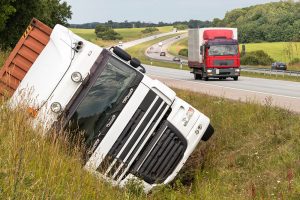
Not every truck crash in Marietta involves a tractor-trailer on the interstate. Box trucks, delivery vans, and service trucks travel Cobb Parkway, Roswell Road, and neighborhood streets every day, and the rules that apply depend on the vehicle’s size and how it was being used.
Federal motor carrier safety rules generally reach vehicles used in interstate commerce with a gross weight rating over 10,000 pounds, along with certain other commercial vehicles. A smaller delivery van may fall outside those rules, but its driver still owes every other driver ordinary care, and the company that sent the driver out may still be responsible. A company can also be responsible for hiring or keeping a driver it knew was unsafe.
A delivery truck may carry one company’s logo while being owned, leased, or operated by another business. Rental agreements, delivery contracts, and the driver’s employment status help show which company controlled the work, and that answer shapes who is responsible for the crash.
The trucking company’s liability insurance is usually the main source of recovery, but your own policy can help in some situations. That matters when a truck drives off after the crash, when the carrier’s coverage is disputed, or when injuries are severe enough to exceed the available limits.
Georgia’s uninsured motorist statute allows your own uninsured motorist coverage to pay when the at-fault driver has no insurance, can’t be identified, or doesn’t have enough coverage. Most current policies add this coverage on top of the other driver’s limits rather than reducing it. Reviewing your declarations page early helps show how much coverage you actually have.
Most Georgia injury lawsuits must be filed within two years of the crash under O.C.G.A. § 9-3-33. Claims involving a government vehicle require written notice much sooner, and other exceptions can change the timeline, so it helps to confirm your deadline early.
You don’t need to have everything organized before you call. Bringing what you have helps us spot issues early and decide which records to request first.
Helpful items include:
If you don’t have these items yet, that’s fine. Part of our job is tracking down records you couldn’t get on your own, including footage from businesses near the crash scene.
Matthew C. Hines founded Hines Law Firm in 2004, and our Marietta office at 680 Powder Springs Street SW keeps us close to the Cobb County courts where truck cases are filed. We prepare every truck case as if it will be tried, because trucking companies and their insurers pay attention to which firms are ready to go to court. That preparation starts with the first records request, not the week before trial.
When you work with us, you get:
Results depend on the facts of each case, and no lawyer can promise an outcome. Call our Marietta office today to talk with a truck accident lawyer about what happened.
Here are answers to other questions people ask after a truck crash in Marietta.
You may have a claim if tire tread, cargo, or equipment from a commercial truck struck your vehicle in Georgia. Trucks are required to secure their loads and maintain their tires, so falling debris often points to a loading or maintenance problem that the carrier or shipper may be responsible for. Photos of the debris and the truck’s identifying markings help connect the damage to the right company.
Yes. When a truck crash in Cobb County takes a loved one’s life, Georgia law allows certain family members to bring a wrongful death claim, and the estate can bring a separate claim for medical and funeral expenses. We know these conversations are painful, and we handle them with care and at your family’s pace.
Most truck accident claims in Cobb County settle without a trial, but a case is more likely to settle fairly when the trucking company knows it is prepared for one. If a lawsuit is filed, it may be heard in Cobb County or in another county where a defendant can be sued. Our litigation department handles the filing, discovery, and every hearing that follows.
A truck driver’s version of events is only one piece of evidence. Engine data, dashcam footage, witness accounts, and the physical damage often tell a clearer story. Georgia law still allows recovery if you are less than 50% at fault, with your award reduced by your share.
Yes, in most cases the property damage claim for your vehicle can be handled separately and resolved before your injury claim. Read any paperwork carefully before signing, because a release that is broader than the property damage claim could affect your injury claim.
Trucking companies start protecting themselves right after a crash, and you should have someone protecting your interests too. Call Hines Law Firm any time to schedule a free consultation in English or Spanish at our Marietta office.
Results depend on the specific facts of each case. This page provides general information about Georgia law and is not legal advice.