
Juan Pesina
Happy Client

When a tractor-trailer crash leaves you injured, the trucking company may be based hundreds of miles away, and its insurer may already be working to limit what it pays. Hines Law Firm’s Dalton truck accident lawyers represent people hurt by commercial trucks on I-75, U.S. 41, and the roads across Whitfield County. We track down the companies behind the truck, wherever they are based, and build a claim that holds them accountable.
Dalton sits on a major interstate freight route close to the Tennessee line, and its flooring plants ship heavy loads every day. That combination means many Dalton truck crashes involve out-of-state carriers, long-haul drivers near the end of a shift, or heavy freight that needs more room to stop. Each of those factors points to different records and different responsible companies.
Call our Dalton office any time, day or night, for a free consultation in English or Spanish.
Our highly experienced lawyers will contact you for a Free Legal Consultation.
"*" indicates required fields
Many trucks traveling through Dalton belong to carriers based in other states, and their drivers often live somewhere else too. A crash near the state line can also raise the question of whether Georgia or Tennessee law applies, which affects deadlines and how fault is handled.
Interstate motor carriers must designate an agent to accept legal papers in every state where they operate under 49 CFR 366.4. That requirement means a trucking company based in another state can still be brought into a Georgia case, as long as the correct company and its agent are identified.
Georgia courts generally apply the law of the state where the injury happened. A crash in Whitfield County falls under Georgia law, which usually allows two years to file a personal injury lawsuit under O.C.G.A. § 9-3-33. A crash just across the line in Tennessee is a different matter, because Tennessee generally allows only one year to file, so the location of the crash and which state’s rules apply should be confirmed right away.
Trucking companies sometimes operate under trade names, share equipment with related businesses, or change names after a crash. Confirming the exact legal entity that operated the truck at the time keeps a claim from stalling against the wrong defendant. Federal registration records and insurance filings help us confirm that identity early.
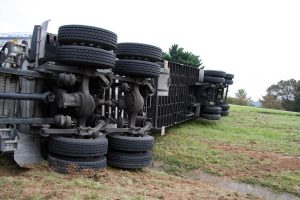 The details on the truck itself are often the quickest path to the company responsible. If you are able, or if someone can help you, try to record:
Even partial information helps, and you don’t need to have all of it before you call. A single photo of the tractor door is often enough to identify the motor carrier and its insurance filings.
“Thank you all for the help during the time of uncertainty , very attentive and very professional group of individuals especially Julian who is a very great part of the team. Took time out of his day to reach out to you either through email or phone call. Your questions will be answered. Thank you all for the great help. 🙏🏽”

“They are a team of very responsible, kind and dedicated professionals, they were always aware of all the details of the case and keeping us informed about each step we should take, I recommend them 100% Thanks so much, Great job”
“They are an excellent team, they always attended to all my concerns, defending my rights and representing me throughout the process. they always made me feel calm and trusting of them. I highly recommend them. They met all my expectations.”
“Helped me so much during my accident. I recommend this firm to everyone I know and meet they’re just that amazing and I love that their team is bilingual!!”
Dalton’s flooring industry moves heavy rolls, pallets, and raw materials between plants, warehouses, and distribution centers. Heavy loads change how a truck handles, how long it needs to stop, and who may share responsibility when something goes wrong.
Federal law generally limits trucks on the interstate system to 80,000 pounds unless they carry a special permit. A truck at or above that weight needs significantly more distance to stop than a lighter vehicle, and an overloaded truck can strain brakes and tires beyond what they were built to handle. Scale tickets and bills of lading often show exactly what the truck weighed when it left the plant.
Not every truck in Dalton is on a long-haul route. Trucks shuttling loads between nearby plants and warehouses make frequent stops, turns, and entries into traffic, and those trips are still subject to safety rules on maintenance, inspection, and safe driving. Drivers on these routes can face pressure to move loads quickly between shifts, which can lead to rushed turns and missed inspections.
The company that loaded the trailer is not always the company that drove it. When an unevenly loaded or overweight trailer contributes to a rollover or brake failure, the shipper or loader may share responsibility with the carrier, and loading records help show who made those decisions. Those records belong to the shipper, so they need to be requested separately from the carrier’s files.
Federal rules require motor carriers to check a driver’s background before putting them on the road and to keep a driver qualification file for each one. Under 49 CFR 391.51, that file generally includes the driver’s application, driving record, road test or equivalent, and medical certification.
A driver qualification file can show prior crashes, license suspensions, failed drug tests, or medical conditions the carrier knew about when it hired the driver. Gaps in the file can be just as telling, because they may show the carrier never checked what the rules required. The carrier must keep these files, so they can be requested during the claim.
Georgia law allows an injured person to claim that a trucking company was negligent in how it hired, trained, supervised, or kept a driver, in addition to holding the company responsible for the driver’s conduct on the job. Those claims focus on the company’s own decisions, such as rushing an inexperienced driver onto long routes or ignoring a pattern of violations.
Training records, safety meeting notes, and the carrier’s discipline history for the driver help show how seriously the company took safety. When a carrier ignored warning signs, that history can also support a claim for punitive damages.
 Federal rules limit how long a commercial truck driver carrying freight can drive and work before resting, because a tired driver reacts more slowly to sudden hazards. Under 49 CFR 395.3, drivers hauling property must generally follow these limits:
Electronic logging devices record driving time automatically, and their data can be compared with fuel receipts, toll records, and delivery times. When those records don’t line up, they can show that a driver was pushing past the limits or that the logs were inaccurate. Dispatch messages and delivery deadlines can also show whether the carrier’s schedule left room for the rest the rules require.
Georgia does not cap compensatory damages in most truck accident cases, which means medical bills, lost income, and pain and suffering are measured by the evidence rather than a fixed limit. Punitive damages are different: they punish especially reckless conduct, and they are capped in most cases under O.C.G.A. § 51-12-5.1.
| Type of damages | What it covers | Is there a cap? |
|---|---|---|
| Economic damages | Medical bills, future care, lost wages, and lost earning ability | No cap in most truck cases |
| Noneconomic damages | Pain, suffering, emotional distress, and loss of enjoyment of life | No cap in most truck cases |
| Punitive damages | Punishment for willful misconduct, wantonness, or conscious indifference, proven by clear and convincing evidence | Generally capped at $250,000, with no cap when the defendant intended harm or was impaired by alcohol or drugs |
Punitive damages are uncommon and depend on the facts. Evidence such as falsified logs, ignored safety violations, or a driver impaired by alcohol or drugs can make them part of the case. They are meant to punish and deter, not to repay a specific loss.
Matthew C. Hines founded Hines Law Firm in 2004, and our Dalton office brings that experience to Whitfield County and the communities around it. We handle truck cases against carriers based anywhere in the country, and we prepare each one as if it will be tried. Carriers and their insurers notice that preparation, and it shapes how they respond to a claim.
When you work with us, you get:
No lawyer can promise a particular result, but we will give you a straight answer about your claim. Call our Dalton office today to talk with a truck accident lawyer.
Here are answers to other questions people ask after a truck crash in the Dalton area.
A trucking company’s liability insurance usually still covers a crash that happened while the policy was in force, even if the company later closes. Under Georgia law, a motor carrier’s insolvency or bankruptcy is also one of the situations that can allow the insurer to be named directly in the lawsuit. Acting quickly helps preserve records before a failing company disappears.
Yes, a truck accident claim in Georgia can include wages already lost and the reduced ability to earn in the future if your injuries keep you from returning to your job or working the same hours. Pay records, job descriptions, and medical opinions help show how the injury affects your work. In serious cases, economists can measure the long-term effect on your earnings.
You can usually resolve the property damage claim for your vehicle separately from your injury claim in Georgia. Read any paperwork carefully before signing, because a release that covers more than property damage could give up your injury claim. If you aren’t sure what a document covers, have it reviewed before you sign.
Bad weather doesn’t excuse a truck driver from driving safely. Federal rules require commercial drivers to use extreme caution and reduce speed in hazardous conditions, and a driver who keeps going at normal speed in poor visibility may still be at fault. Weather data from the time of the crash can show what conditions the driver was facing.
Yes, you may still have a claim if a truck forced you off the road without making contact. If the truck left and can’t be identified, Georgia uninsured motorist coverage may apply, but the law generally requires an eyewitness other than you to back up your account when there was no physical contact.
A crash with a commercial truck can leave you dealing with a company you have never heard of in a state you have never visited. Call Hines Law Firm any time to schedule a free consultation in English or Spanish, and we will explain your options and what to do next. We will handle the out-of-state companies so you can focus on your recovery.
Results depend on the specific facts of each case. This page provides general information about Georgia law and is not legal advice.