
Juan Pesina
Happy Client

Being hit by a tractor-trailer can leave you hurt, shaken, and unsure who is even responsible, especially when the truck was hauling someone else’s container on someone else’s equipment. Hines Law Firm’s Austell truck accident lawyers represent people injured by commercial trucks along I-20, Thornton Road, and the roads of south Cobb County. We sort out which companies were involved and hold each one accountable for its part, so you are not left chasing answers while you recover.
Austell is home to one of Norfolk Southern’s busiest intermodal terminals, where shipping containers move between trains and trucks every day. That means many truck crashes near Austell involve container trucks, chassis supplied by equipment pools, and drivers who may work for themselves rather than for a large carrier.
Call our Austell office any time, day or night, for a free consultation in English or Spanish.
Our highly experienced lawyers will contact you for a Free Legal Consultation.
"*" indicates required fields
The Norfolk Southern terminal in Austell transfers containers between rail cars and trucks, and those trucks then carry the containers to warehouses and distribution centers across the region. This short-haul work, called drayage, puts a steady stream of container trucks on I-20 and the surface roads leading to it. Many of those trips begin or end within a few miles of Austell neighborhoods.
Drayage trucks make many short trips a day, often on tight schedules set by terminal appointment times. The tractor, the chassis underneath the container, and the container itself may each belong to a different company, which is why a drayage crash can involve several businesses at once. Each of those businesses may have its own insurer and its own version of what went wrong.
Container trucks often make wide turns at intersections, merge onto I-20 while still building speed, and wait in lines near terminal gates. Those moments create risks for nearby drivers, especially when a truck turns across lanes or enters traffic without enough room.
The chassis number, container number, and the companies named on the truck are often the fastest way to identify everyone involved. That information can be lost once the equipment is returned to a pool and reassigned to another driver. Repairs made after the crash can also erase evidence of the defect that caused it.
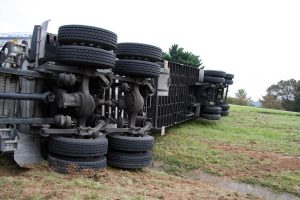 Federal rules make the company that supplies a container chassis, called an intermodal equipment provider, responsible for tendering equipment that is in safe and proper operating condition. Under 49 CFR 390.40, that provider must also maintain inspection and repair records and fix defects drivers report before the chassis leaves its facility.
The equipment provider’s duties include:
The driver and the motor carrier have duties too. Federal guidance requires drivers to inspect key parts of intermodal equipment before taking it on the road, such as brakes, lights, tires, and the locking devices that hold the container in place.
“Thank you all for the help during the time of uncertainty , very attentive and very professional group of individuals especially Julian who is a very great part of the team. Took time out of his day to reach out to you either through email or phone call. Your questions will be answered. Thank you all for the great help. 🙏🏽”

“They are a team of very responsible, kind and dedicated professionals, they were always aware of all the details of the case and keeping us informed about each step we should take, I recommend them 100% Thanks so much, Great job”
“They are an excellent team, they always attended to all my concerns, defending my rights and representing me throughout the process. they always made me feel calm and trusting of them. I highly recommend them. They met all my expectations.”
“Helped me so much during my accident. I recommend this firm to everyone I know and meet they’re just that amazing and I love that their team is bilingual!!”
When a crash traces back to the equipment rather than the driver’s choices, responsibility can shift or be shared. The table below shows how common failures on container trucks often line up.
| Failure | What it can cause | Who may share responsibility |
|---|---|---|
| Worn or out-of-adjustment chassis brakes | Longer stopping distances and rear-end crashes | The equipment provider and the motor carrier |
| Container not locked to the chassis | A container sliding or falling into traffic | The driver, the motor carrier, and the terminal or provider |
| Tire failure on the chassis | Loss of control or debris in the roadway | The equipment provider and, in some cases, the tire maker |
| Missing or broken lights | Nighttime crashes when a trailer can’t be seen | The equipment provider and the driver who failed to report it |
| Overweight or poorly balanced container | Rollovers on ramps and curves | The shipper that loaded it and the motor carrier |
These categories often overlap in a single crash. Inspection records, repair invoices, and the driver’s pre-trip report usually show which company knew about a problem and when. A defect reported by an earlier driver and never repaired can be especially strong evidence.
Many drayage drivers are owner-operators who own their tractors and lease them to a licensed motor carrier. Federal leasing rules generally require the carrier to take control and responsibility for the leased equipment while it is operating under the carrier’s authority, so the carrier may be responsible even if it doesn’t own the truck.
The written lease between the driver and the carrier identifies whose operating authority the truck was running under and who was required to insure it. That document can decide which insurance policy pays and how much coverage is available. Carriers don’t always share it voluntarily, so it is often requested formally during the claim.
Some trucks carry little more than a USDOT number on the door. That number can be traced to the carrier responsible for the truck, even when the driver claims to work independently. We use those records to confirm the correct legal name of each company before any claim is filed.
Georgia divides responsibility among everyone whose fault contributed to a crash. Under O.C.G.A. § 51-12-33, a jury assigns each party a percentage of fault, and each defendant generally pays only its own share of the damages.
Because each company usually pays only its share, leaving a responsible business out of the claim can leave part of your losses uncovered. In a drayage crash, that might mean the equipment provider, the motor carrier, the driver, and sometimes the shipper all need to be part of the case.
The same statute reduces your recovery by any fault assigned to you, and it bars recovery if you are found 50% or more at fault. Insurers in multi-company cases sometimes try to push blame toward the injured driver, so clear evidence about how the crash happened matters.
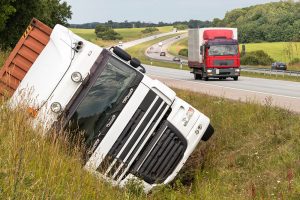 Container truck crashes can involve several insurance policies, and identifying all of them early helps show how much coverage is really available. The policy that pays first often depends on whose authority the truck was operating under and what the driver was doing at the time.
Interstate motor carriers must carry minimum liability insurance under federal rules, and many carry more than the minimum. That policy usually responds when the truck was operating under the carrier’s authority and on a dispatched load.
An owner-operator may also carry a separate policy for times when the truck isn’t working for a carrier. In addition, interchange agreements between carriers and equipment providers often spell out who is responsible for the chassis and who must insure it, which can open another source of recovery.
The steps you take after a crash can help preserve evidence that is easy to lose, especially with equipment that changes hands every day. If you are able, or if someone can help you, try to take these steps:
Georgia generally gives injured people two years from the crash to file a lawsuit under O.C.G.A. § 9-3-33. Exceptions can shorten or extend that period, and evidence about container equipment often disappears much sooner, so it helps to act early.
Matthew C. Hines founded Hines Law Firm in 2004, and our Austell office at 5000 Austell-Powder Springs Road keeps us close to the families and roads we serve. Many of our Austell clients prefer to handle their case in Spanish, and our team works with them in their language from the first call through the end of the case. Clear communication matters even more when several companies and insurers are involved.
When you work with us, you get:
No lawyer can promise a particular result, but we will give you an honest assessment of your claim. Call our Austell office today for a free consultation with a truck accident lawyer.
Here are answers to other questions people ask after a truck crash in the Austell area.
Yes. Hines Law Firm provides consultations and full representation in Spanish for truck accident clients in Austell, so you can explain what happened, review documents, and ask questions in the language you’re most comfortable using. You won’t need to bring a family member to translate for you.
Yes, a truck driver must use reasonable care on private property just as on a public road, and a crash in a parking lot, loading area, or warehouse entrance can still support an injury claim in Georgia. Police may not always write a full report for these crashes, so photos and witness information become even more important. Security cameras at warehouses and businesses can also capture what happened, but that footage is often recorded over quickly.
A traffic ticket can support your claim, but it doesn’t decide fault in the civil case by itself. The driver may contest the ticket, and the insurer will still look at the full set of evidence, so the claim should be built on more than the citation. Witness accounts, video, and the truck’s own data usually carry more weight than the ticket alone.
A fast offer from a trucking company’s insurer often comes before the full extent of your injuries is known. Once you sign a release, you generally can’t reopen the claim, so it helps to have the offer reviewed before accepting anything. An early offer may not account for future treatment, lost income, or the effect of the injury on your daily life.
Passengers can usually bring a claim against every driver who contributed to the crash, including the truck driver and, if they shared fault, the driver of the car you were in. A passenger may also be able to use uninsured motorist coverage from the car’s policy or their own household policy. Passengers are rarely found at fault, which can make their claims more straightforward.
A truck crash involving shared equipment and multiple companies can feel impossible to untangle on your own, especially while you are still recovering. Call Hines Law Firm any time to schedule a free consultation in English or Spanish, and we will explain who may be responsible and what comes next.
Results depend on the specific facts of each case. This page provides general information about Georgia law and is not legal advice.