
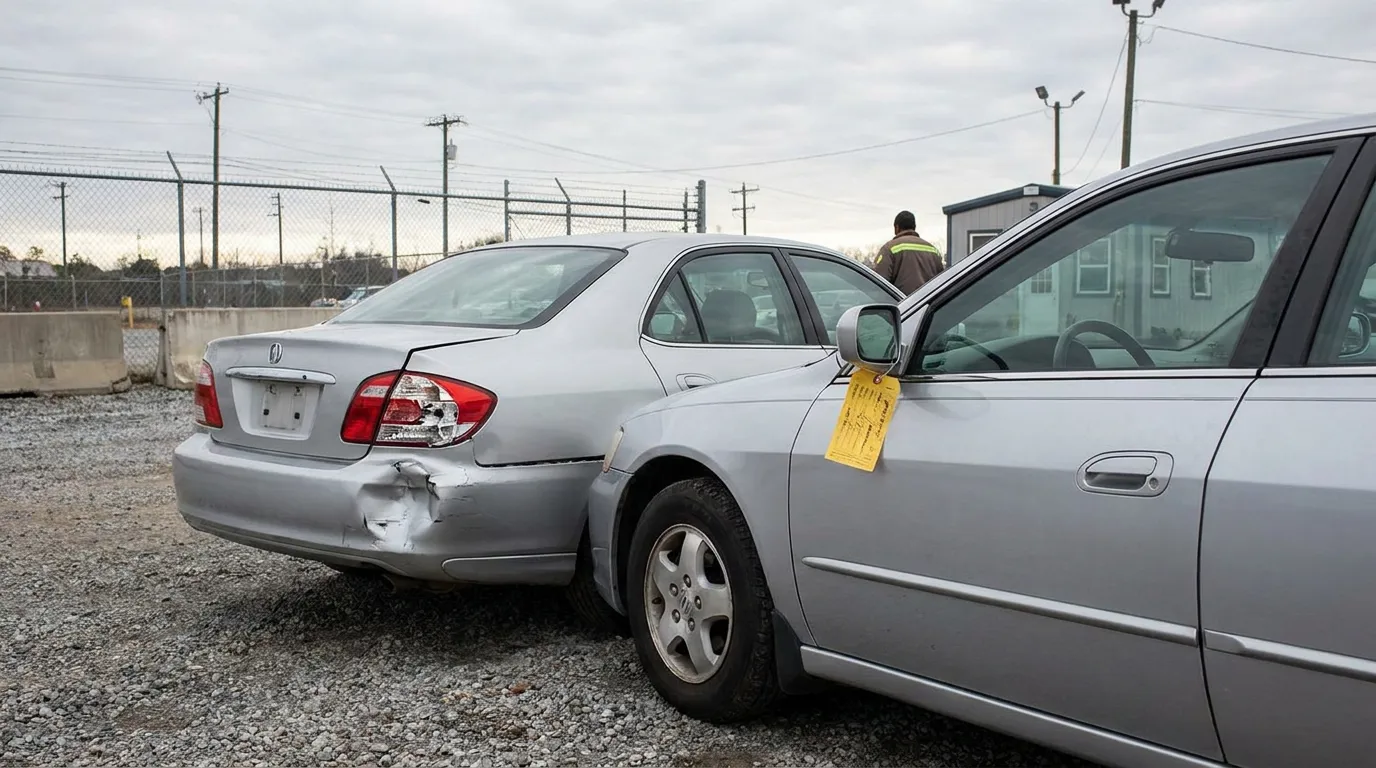
Protecting the Proof: How Georgia Law Keeps Crash Evidence From Disappearing
Key Takeaways: A spoliation letter is a formal written notice sent soon after a Norcross car accident that demands a driver, company, insurer, or third party preserve all evidence tied to the collision, from dashcam and surveillance video to event data recorder downloads, telematics, maintenance logs, and the damaged vehicle itself. It matters because O.C.G.A. § 24-14-22 allows a rebuttable presumption that destroyed evidence was unfavorable to the party that lost it, and written notice may help show litigation was reasonably foreseeable. Most parties generally have no freestanding duty to retain footage, so the duty typically attaches only once litigation is pending or reasonably anticipated. Formal discovery under O.C.G.A. § 9-11-34 is generally unavailable until suit is filed and served, and a preservation letter can help fill that dangerous gap. Georgia’s two-year filing deadline under O.C.G.A. § 9-3-33 is not the evidence deadline, since video may be overwritten in days and vehicles salvaged in weeks. Acting quickly, and with counsel, may give an injured person a better chance to protect the proof.
A spoliation letter is a formal written legal notice sent shortly after a crash that demands a person, company, or insurer preserve all evidence connected to the collision. In a Norcross car accident, that can mean dashcam video, a commercial truck’s electronic control module data, maintenance logs, cell phone records, a gas station’s surveillance footage, or the damaged vehicle itself. The letter puts the recipient on notice that litigation is reasonably anticipated, meaning routine deletion or repair of that evidence may later be scrutinized as spoliation rather than accepted as ordinary business practice.
If you were hurt in a collision in Gwinnett County, timing matters more than most people realize. The team at Hines Law offers free consultations, is available 24/7, and provides bilingual service. Call 770-800-2000 or contact us now to discuss preserving the proof in your case.
Why a Spoliation Letter Car Accident Notice Carries Legal Weight in Georgia
Georgia law generally does not treat destruction of relevant evidence as a neutral event. Under the state’s evidence code, a rebuttable presumption from spoliation may arise when a party destroys or fails to preserve material within its control, and O.C.G.A. § 24-14-22 provides that such evidence may be presumed unfavorable to that party. That presumption isn’t automatic; Georgia courts weigh whether litigation was pending or reasonably foreseeable when the evidence disappeared.
A preservation letter may help establish that foreseeability. Once a trucking company, rideshare operator, or property owner receives written notice that specific items are relevant to a contemplated Georgia injury claim, it becomes harder to characterize later deletion as innocent. Georgia case law also recognizes that a defendant’s duty may arise from actual or constructive notice of a potential claim, so a letter is evidence of notice rather than the only source of it. Courts may consider the notice, the recipient’s retention practices, and prejudice to the injured party when deciding what sanction, if any, is appropriate. Outcomes remain fact-dependent.
What Typically Goes Into the Letter
The strongest preservation demands are specific rather than general. A vague request to "keep everything" can invite disputes about what was actually covered. Attorneys generally identify categories of evidence by name, describe the relevant time window, and instruct the recipient to suspend automatic overwrite and destruction routines.
- Event data recorder and telematics downloads from the involved vehicles
- Dashcam, bodycam, doorbell, and business surveillance video
- Driver qualification files, hours-of-service logs, and inspection or repair records
- Cell phone usage data, dispatch messages, and internal incident reports
- The physical vehicles, tires, and damaged parts in their post-crash condition
💡 Pro Tip: Photograph the scene, vehicles, and any nearby cameras mounted on buildings before you leave, if physically able. A single storefront camera pointed at Jimmy Carter Boulevard may resolve a disputed left-turn case, but that footage is frequently overwritten within days.
The Evidence Most at Risk After a Norcross Collision
Digital evidence often has a short shelf life. Many commercial video systems recycle storage on a rolling basis, telematics providers may purge data on fixed schedules, and vehicles are often repaired or sent to salvage auction within weeks. Physical evidence can fade even faster: skid marks, gouges, and debris fields along Buford Highway can vanish after a single rainstorm or roadway resurfacing.
Vehicle data deserves particular attention because it can contradict the insurer’s narrative. Data such as speed, braking, throttle position, steering input, and seatbelt status recorded in the seconds before impact may directly rebut an adjuster’s reconstruction. Our discussion of car data versus insurer claims walks through this conflict. Preserving that data generally requires a professional download, with the vehicle owner’s consent or a court order, before the vehicle is repaired or the module is overwritten.
| Evidence Type | Typical Risk of Loss | Who Usually Controls It |
|---|---|---|
| Commercial surveillance video | Overwritten on a rolling cycle | Business or property owner |
| Vehicle event data recorder | Lost on repair, salvage, or overwrite | Owner, insurer, or body shop |
| Truck telematics and ELD data | Purged per company retention policy | Motor carrier |
| Physical roadway evidence | Weather and traffic within days | No one; must be documented |
| Cell phone records | Carrier retention limits | Driver and wireless carrier |
How Preservation Notices Connect to Formal Discovery
A spoliation letter is not a court order. Formal compulsion comes later, through Georgia’s civil discovery rules. Under requests for production of documents, a party may serve another party with a demand to inspect and copy designated documents, electronically stored information, and tangible things within that party’s possession, custody, or control, per O.C.G.A. § 9-11-34(a). Subsection (b) generally requires the request to specify a reasonable time, place, and manner, and subsection (c) provides a separate mechanism for obtaining production from non-parties, generally by subpoena.
The gap between the crash and the lawsuit is often where evidence disappears. Discovery under O.C.G.A. § 9-11-34 is generally unavailable until a case is filed and a party has been served, which may be months after the collision. The preservation letter can help fill that gap by imposing a documented expectation of retention in the interim, and may create a paper trail showing when the recipient learned the material mattered.
Who Should Receive the Notice
More than one party may hold critical material, and each may need a separate letter. In a straightforward two-car Norcross injury matter, the at-fault driver and their insurer may be the only recipients. Commercial and multi-vehicle cases are often different.
Common recipients include motor carriers, rideshare platforms, vehicle owners separate from the driver, employers of a driver acting in the scope of employment, repair facilities, towing and storage yards, and nearby businesses whose cameras captured the roadway. Third parties who are not defendants may still control decisive footage. A courteous, specific request to a neighboring business may succeed where a subpoena would arrive too late.
Georgia’s Retention Rules and What They Do Not Cover
Georgia does impose retention duties in narrow, specific contexts. Under O.C.G.A. § 40-1-224, a peer-to-peer car-sharing program must collect, verify, and retain records pertaining to vehicle use for a period not less than the applicable personal injury statute of limitations. That is a targeted rule tied to a particular industry and does not create a general evidence-preservation duty elsewhere.
Most parties generally face no comparable statutory obligation. A private driver, an independent trucking company, or a shopping center owner generally has no freestanding duty under Georgia law to preserve dashcam video or surveillance recordings simply because a crash occurred nearby, though industry-specific rules, such as federal motor carrier recordkeeping requirements, may apply to some commercial defendants. The duty to preserve typically attaches when litigation is pending or reasonably anticipated, precisely what a written notice is designed to address.
The Two-Year Clock and Why Waiting Is the Real Danger
Georgia generally gives injury victims two years from the date of the accident to file suit. O.C.G.A. § 9-3-33 provides that actions for injuries to the person shall generally be brought within two years after the right of action accrues, with separate periods for reputation and loss of consortium claims. Limited exceptions and tolling provisions may apply and are generally construed narrowly. Ante litem notice requirements for claims against public entities operate on their own, much shorter timetables, distinct from the civil limitations period.
The filing deadline and the evidence deadline are not the same deadline. Two years is generally ample time to file. It may be far too long to wait to preserve proof. Surveillance video may be gone in a week, a vehicle may be crushed in a month, and a driver’s phone may be replaced before anyone asks about it.
💡 Pro Tip: Keep your damaged vehicle available for inspection before authorizing repairs or accepting a total-loss payout. Signing the title over to an insurer may transfer control of the single best piece of physical proof in your case.
What Happens When Evidence Is Destroyed Anyway
Receiving a preservation notice does not mean a party will comply. When evidence disappears after notice, an injured plaintiff may ask the court for relief. Georgia trial courts generally have discretion to fashion remedies ranging from a jury charge on the rebuttable presumption to exclusion of related testimony or, in serious cases, striking a defense. Those sanctions generally reach parties to the case; when a non-party loses evidence, available remedies are typically more limited.
Courts generally weigh several factors before imposing any sanction, including whether the party had notice of relevance, the degree of prejudice to the opposing side, whether the loss was intentional or routine, and whether a lesser remedy would cure the harm. Because these determinations are discretionary and fact-driven, no attorney can responsibly predict the outcome in advance.
Practical Steps in the First Week
What you do in the days after a crash can shape the case more than anything that happens later. Seek medical evaluation promptly, request the official crash report, and preserve your own materials, including photographs, medical records, and adjuster messages. Avoid giving a recorded statement before you understand the scope of your injuries.
Speaking with a spoliation letter car accident lawyer early may allow preservation notices to go out while the material still exists. Attorneys can also arrange for a vehicle inspection, canvass nearby businesses for camera coverage, and identify corporate defendants whose retention policies might otherwise quietly erase the record.
Frequently Asked Questions
1. Does a spoliation letter have to be sent by an attorney?
No statute requires it. In practice, letters drafted by counsel tend to be more specific about categories of data and may be more likely to be taken seriously by corporate risk departments.
2. What if the other driver’s insurance company already contacted me?
Contact from an adjuster does not substitute for a preservation demand and is generally not a commitment to retain anything. You are generally under no obligation to give a recorded statement to the other driver’s insurer, though your own policy may impose cooperation duties, so consider consulting an attorney first.
3. Can I send a preservation notice to a business that is not at fault?
Generally, yes. Third parties frequently hold surveillance footage that captured the collision, and a targeted written request may prompt them to save it. A non-party’s cooperation is generally voluntary until a subpoena issues, so early, polite contact matters.
4. Does a spoliation letter car accident notice extend my filing deadline?
Generally, it does not. Preservation demands generally have no effect on the limitations period under O.C.G.A. § 9-3-33, and the two-year clock generally continues to run independently unless a recognized tolling provision applies.
5. What if evidence was already destroyed before I hired a lawyer?
Your claim is not necessarily over. Counsel may still ask the court to apply the rebuttable presumption under O.C.G.A. § 24-14-22 if the duty to preserve had already attached, and may seek to reconstruct the collision through witness testimony, physical damage analysis, and remaining records.
Moving Quickly Protects Your Options
A spoliation letter is a straightforward tool that can carry outsized consequences. It converts a passive hope that evidence survives into a documented demand that it be kept, and it may position an injured person to seek meaningful relief if the material vanishes anyway. Georgia evidence preservation principles under O.C.G.A. § 24-14-22, the discovery framework in O.C.G.A. § 9-11-34, and the two-year window in O.C.G.A. § 9-3-33 generally work together, but often only if someone acts before the footage cycles and the vehicle goes to salvage. Every case turns on its own facts, and the appropriate strategy depends on who holds the evidence and how quickly they can be reached.
Do not let the proof in your case disappear on a retention schedule. Hines Law is available around the clock, offers bilingual service, and provides a free consultation to injured people across Norcross and the Atlanta metro area. Call 770-800-2000 or schedule a call with our team today.
Disclaimer: This content is for informational purposes only and is not legal advice. Every case is unique, and results may vary. Consult an attorney about your specific circumstances.