
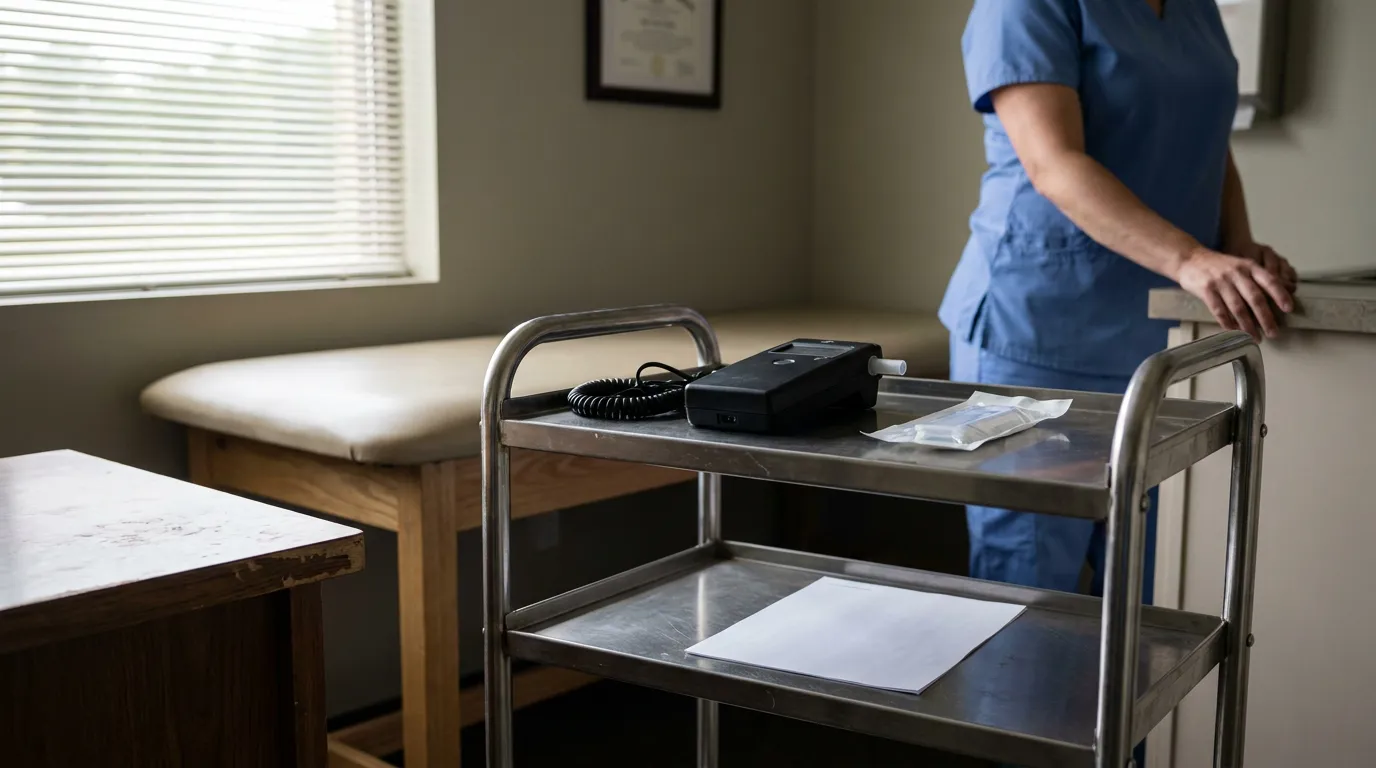
When a Work Injury Leads to an Alcohol Test in Georgia
Key Takeaways: Yes, a Georgia employer can generally alcohol test you hours after a work injury, but timing strongly affects what the result means legally. Under O.C.G.A. § 34-9-17(b)(1), a blood alcohol concentration of 0.08 grams or more within three hours of the accident creates a rebuttable presumption that alcohol caused the injury. Drugs carry an 8-hour window, and an unjustified refusal to test creates its own presumption. Outside these windows, the employer or insurer generally has to prove intoxication caused the injury. A positive or late test does not automatically end your claim, because you may be able to rebut it with witness statements, unsafe conditions, medical records, or valid prescriptions.
Yes, a Georgia employer can generally ask you to take an alcohol test after a work injury, even hours later, but timing has a big effect on what the result means legally. Under Georgia workers’ compensation law, a blood alcohol concentration of 0.08 grams or more measured within three hours of the accident creates a rebuttable presumption that alcohol caused the accident and injury. A test taken after that window does not trigger the presumption on its face. The employer or insurer generally has to prove intoxication caused the injury, though it may still use the late result as evidence.
If you got hurt on the job in Dalton and your claim is being questioned because of an alcohol or drug test, you can get help right away. Hines Law offers free consultations, bilingual service, and is available 24/7. Call 770-800-2000 or schedule your free consultation to talk with our team.

Why Georgia Employers Test After Work Injuries
Many Dalton-area employers test injured workers because state law ties post-injury testing to insurance discounts. Georgia runs a voluntary Drug-Free Workplace Program through the State Board of Workers’ Compensation. Certified employers get a discount on premiums and agree to follow certain testing rules.
The Mandatory Post-Injury Testing Rule
Under O.C.G.A. § 34-9-415, a certified drug-free workplace employer must require a substance abuse test if the employee caused or contributed to an on-the-job injury that resulted in lost work time. That is why carpet mills, manufacturing plants, and warehouses around Dalton often send injured workers for a test after an accident. Employers outside the program may still test under their own policies, but they do not get the discount. Whether a test was proper can depend on the employer’s certification status, written policy, and how the test was done.
Testing Methods Recognized by Georgia Law
Georgia’s statute lets employers rely on chemical analysis of blood, urine, breath, or other bodily substances. O.C.G.A. § 34-9-17(b)(3) refers to tests "performed in the manner set forth in Code Section 34-9-415," which sets procedural standards for certified programs. If the collection, chain of custody, or lab handling did not meet those standards, the result’s reliability may be open to challenge.
How the 3-Hour Alcohol Test Rule Works Under OCGA 34-9-17
The intoxication defense comes from O.C.G.A. § 34-9-17(b), which bars compensation for an injury or death caused by alcohol intoxication or being under the influence of marijuana or a controlled substance. The bar applies only when the intoxication actually caused the injury. There is an exception for drugs a physician lawfully prescribed to you, as long as you took them as prescribed. The full text of OCGA 34-9-17 explains how the presumptions work.
The 0.08 BAC Presumption
Under O.C.G.A. § 34-9-17(b)(1), if a test shows a blood alcohol concentration of 0.08 grams or more within three hours of the alleged accident, the law presumes alcohol caused the accident and injury. A test taken four or five hours later falls outside that window, so the presumption generally does not apply. The employer may still argue intoxication, but it generally has to prove both intoxication and causation without the presumption’s help.
What Happens Outside the Window
O.C.G.A. § 34-9-17(c) states that, apart from the listed presumptions, the burden of proof falls on the party claiming the exemption or forfeiture. That usually means the employer or its insurer. They may use other evidence, such as witness statements, a late test result, or expert testimony estimating your earlier alcohol level. A delayed test does not guarantee the claim will be paid, and the weight of late evidence depends on the facts.
Does Workers Comp Drug Test Differently Than It Tests for Alcohol?
Yes, Georgia uses a different time window for drugs than for alcohol. Under O.C.G.A. § 34-9-17(b)(2), if a test finds any amount of marijuana or a controlled substance in your blood within eight hours of the alleged accident, the law presumes the drug caused the accident and injury. A positive drug result does not necessarily mean you were impaired when you got hurt, which may matter when rebutting the presumption.
| Substance | Testing Window | Threshold | Presumption Type |
|---|---|---|---|
| Alcohol | Within 3 hours of accident | 0.08 grams or greater | Rebuttable |
| Marijuana or controlled substance | Within 8 hours of accident | Any amount | Rebuttable |
| Unjustified refusal to test | N/A | Refusal itself | Rebuttable |
The prescription exception can be important for injured workers who take lawful medication. If a physician lawfully prescribed the drug and you took it as directed, O.C.G.A. § 34-9-17(b) generally excludes it from the bar on benefits. Misuse, such as taking more than the prescribed dose, may not be protected. Keep records of your prescriptions.
Refusing a Work Injury Alcohol Screen Can Backfire
Refusing a test without a valid reason can hurt your Georgia workers’ compensation claim. Under O.C.G.A. § 34-9-17(b)(3), if you unjustifiably refuse a reliable, scientific test performed as described in O.C.G.A. § 34-9-415, the law presumes alcohol or drugs caused the accident. That presumption is also rebuttable, but it may put you at a disadvantage from the start.
Whether a refusal was "unjustified" usually depends on the facts. A worker rushed into emergency surgery may be in a very different position than one who simply walked away from the collection site. If your medical condition prevented testing, records showing that may become important evidence.
💡 Pro Tip: If you are asked to take a test while getting medical treatment, write down who asked, what time it was, and where you were as soon as you can. Exact times can decide whether a result falls inside the 3-hour or 8-hour window.
Fighting Back When a Test Threatens Your Benefits
A positive result is a presumption, not a final decision. O.C.G.A. § 34-9-17(b) makes these presumptions "rebuttable," which means you may be able to offer evidence that alcohol or drugs did not cause your accident. Rebutting a presumption can be difficult and usually takes strong evidence.
Evidence that may help rebut the presumption can include:
- Proof that equipment failure, a co-worker’s mistake, or an unsafe condition caused the accident
- Witness statements describing your normal behavior before the injury
- Records showing problems with test collection, timing, or chain of custody
- Medical records explaining a result or a refusal
- Proof of a valid prescription taken as directed
As the injured worker, you still generally have to prove that your injury arose out of and in the course of your employment and that it caused your disability. Building medical evidence early may strengthen your claim. Georgia’s system is generally no-fault, so a simple mistake on your part usually does not bar benefits by itself, apart from the specific defenses in O.C.G.A. § 34-9-17. Our article on whether you can get workers’ comp if you were at fault explains how Georgia treats employee mistakes.
Other Defenses Employers May Raise
O.C.G.A. § 34-9-17(a) also bars compensation for willful misconduct, intentionally self-inflicted injury, attempts to injure another person, and willful failure to use a safety appliance or perform a duty required by statute. Insurers sometimes raise these defenses together with intoxication. Each has its own proof requirements, and the employer carries the burden under O.C.G.A. § 34-9-17(c).
💡 Pro Tip: Do not sign a written statement about drinking or drug use for your employer or insurer before you understand your rights. What you say early on may be used to support a denial.
Protecting Your Claim After a Dalton Work Injury
Act quickly to protect your rights after a work injury, especially if a test is involved. Report the injury promptly, get medical care, and keep copies of every document you receive. Georgia generally requires you to give your employer notice within 30 days of the accident and to file a claim with the State Board within one year. Missing a deadline can put your benefits at risk no matter what the test showed.
If your claim was denied because of a test, you can generally challenge the denial by requesting a hearing before the State Board of Workers’ Compensation. Talking with a Georgia workers compensation lawyer can help you understand whether the test was timely, properly done, and strong enough to support a denial.
Frequently Asked Questions
1. Does workers comp drug test every injured employee in Georgia?
Not every employer tests. Under O.C.G.A. § 34-9-415, certified drug-free workplace employers must test when an employee caused or contributed to an on-the-job injury that resulted in lost work time. Other employers may test under their own policies.
2. What if my alcohol test was taken five hours after the accident?
The 0.08 BAC presumption in O.C.G.A. § 34-9-17(b)(1) applies only to results within three hours of the accident. Outside that window, the employer generally has to prove intoxication caused the injury under O.C.G.A. § 34-9-17(c), though it may still use the late result.
3. Can I lose benefits for taking prescribed medication?
Generally, no, if a physician lawfully prescribed it and you took it as prescribed. Misusing a prescription may not be protected.
4. Is a positive test the end of my claim?
Not necessarily. The presumptions are rebuttable, so you may be able to present evidence that alcohol or drugs did not cause your accident. Results depend on the facts of each case.
5. What happens if I refuse the test?
An unjustified refusal creates a rebuttable presumption that alcohol or drugs caused the accident under O.C.G.A. § 34-9-17(b)(3). A refusal with a valid reason, such as an urgent medical condition, may be treated differently.
Key Takeaways for Injured Georgia Workers
Georgia employers can generally test you after a work injury, but the timing and quality of the test can significantly affect how much it matters. The 3-hour window for alcohol and the 8-hour window for drugs create presumptions only when their conditions are met, and even then you may be able to rebut them. Outside those presumptions, the employer generally has to prove its intoxication defense, including causation.
If an alcohol or drug test is putting your benefits at risk, the team at Hines Law is ready to listen. We are available 24/7, offer bilingual service, and provide free consultations to injured workers in Dalton and throughout Georgia. Call 770-800-2000 or contact us now to schedule a call today.
Disclaimer: This content is for informational purposes only and is not legal advice. Every case is unique, and results may vary. Consult an attorney about your specific circumstances.